Why Security Is Now a B2B SaaS Sales Feature
- Editorial Team

- Mar 25
- 5 min read
Updated: May 5
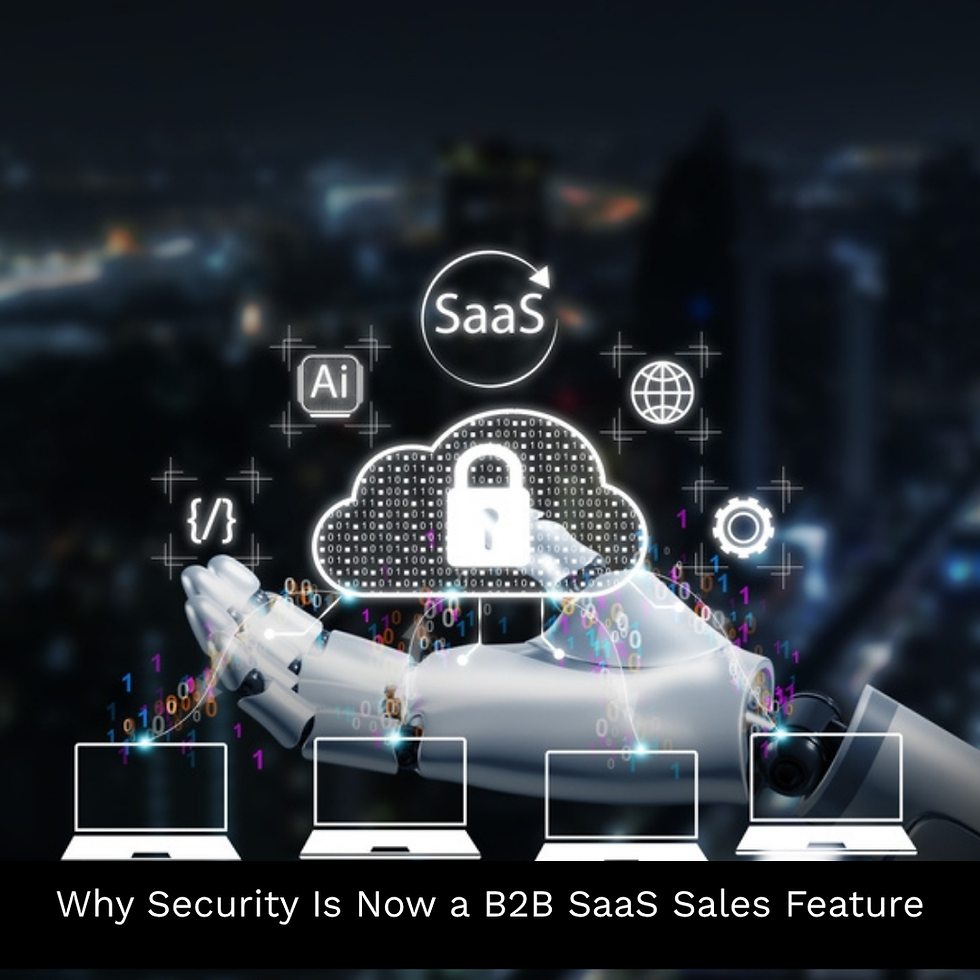
For many years, security in B2B SaaS was viewed as a backend requirement—important, but rarely a deciding factor in deal closing. It was hidden in IT conversations, lived in compliance documents, and only came to light in the final stages of procurement reviews. There has been a significant shift in that reality.
By 2026, security will be a front-line sales feature rather than merely a technical necessity. It affects purchasing decisions, speeds up deal cycles, and increasingly dictates which suppliers are included in the shortlist. Security has emerged from the background and taken center stage in a world where data breaches, regulatory pressure, and AI-driven risks are all on the rise.
The Transition: From Cost Center to Revenue Generator
In the past, security was viewed as a cost center—an operational expense required to avert worst-case situations. These days, it directly contributes to the creation of income.
Compared to even a few years ago, modern buyers are much more security conscious, particularly in the enterprise and mid-market segments. CISOs, compliance officers, and risk managers are now part of procurement teams, and they actively assess vendors according to their security posture.
This implies that you are not only at risk, but you are already losing business if your product is unable to effectively convey its security advantages.
“Passing checks” is no longer the focus of security. Early in the sales process, it's important to establish trust.
Why Security Is Now the Top Priority for Buyers
Security is now a top consideration when purchasing SaaS due to a number of macro trends:
1. Growing Cyber Threats
The frequency and sophistication of cyberattacks are increasing. Organisations are always at risk from ransomware to API breaches. Customers are no longer prepared to take chances with suppliers who are unable to provide robust security measures.
2. Regulatory Pressure
Data protection laws and international regulations are becoming more stringent. Businesses need to make sure that all of the tools in their stack adhere to standards like ISO 27001, SOC 2, GDPR, and more. Not only is non-compliance illegal, but it also poses a risk to one's finances and reputation.
3. SaaS Tool Explosion
Businesses now employ dozens, even hundreds, of SaaS apps. Another potential vulnerability is introduced with every new tool. Consequently, businesses are becoming pickier and giving preference to suppliers who can demonstrate strong security frameworks.
4. Data Sensitivity and AI
The sensitivity of the data being processed has greatly increased with the emergence of AI-powered tools. Businesses want complete assurance that their data is secure, whether it is financial information, customer data, or proprietary insights.
Security as a Differentiator in the Market
Differentiation is crucial in a crowded SaaS market. It is possible to duplicate features, modify prices, and enhance user interfaces, but trust is more difficult to establish and even more difficult to imitate.
Security becomes a potent differentiator at this point.
Businesses that actively demonstrate their security capabilities have a big advantage. Leading SaaS companies are using security as a proactive sales narrative rather than a reactive checkbox.
For instance, high-performing sales teams emphasise security early in demos, pitch decks, and marketing materials rather than waiting for prospects to enquire about compliance. Instead of portraying it as a minor detail, they present it as a fundamental strength.
This method accomplishes two goals:
It increases self-assurance from the first encounter
It lessens friction later in the purchasing process
How Security Shortens Sales Cycles
Faster deal closure is one of the most significant unstated advantages of strong security positioning.
The security review stage of many B2B SaaS transactions has the longest delays. IT and legal teams review paperwork, ask for audits, and assess risks. Deals may stall for weeks or even months if your security framework is ambiguous or lacking.
But this bottleneck is eliminated when security is transparent, well-documented, and readily available.
Businesses that make investments in:
Extensive security records
Centers of public trust
Certifications of clear compliance
frequently observe noticeably shorter sales cycles.
Strong security essentially lowers uncertainty, which is the greatest obstacle to making decisions.
Making Security a Sales Asset
SaaS companies must reconsider how they present security if they are to effectively use it as a sales feature. To “have” security is insufficient; you also need to effectively communicate it.
1. Create a Story That Prioritises Security
Your messaging should make it apparent how your platform safeguards user information. This should be translated into business value rather than being restricted to technical jargon.
Rather than stating: “End-to-end encryption”
Say: “Every step of the process protects your customer data, lowering risk and guaranteeing compliance.”
2. Establish a Center for Trust
Prospects can quickly access certifications, policies, and compliance information through a dedicated trust center or security page. This openness lessens back and forth during assessments and increases credibility.
3. Make Sales Teams Capable
Sales teams ought to be prepared to talk about security with assurance. This comprises:
Being aware of important certifications
Providing a basic explanation of security architecture
Resolving typical objections
Clear communication about security by sales representatives fosters trust right away.
4. Emphasise Compliance and Certifications
Your website, pitch decks, and proposals should all prominently display certifications such as ISO 27001, SOC 2, and others. These act as independent verification of your security requirements.
5. Use Security in Marketing Campaigns
Security can be an effective way to create content and generate demand. High-intent buyers can be drawn to blogs, whitepapers, and case studies that highlight security issues and solutions.
Security's Role in Enterprise Deals
Security is frequently the gatekeeper in enterprise SaaS. Regardless of the strength of your product, you can be immediately disqualified if you don't comply with security requirements.
Vendor evaluation procedures are usually stringent for enterprise buyers. Standard procedures include compliance checks, penetration testing, and security questionnaires.
Businesses that approach security as a fundamental component of their product rather than an afterthought have a distinct advantage in this setting.
They sell dependability, confidence, and peace of mind in addition to software.
The Future: Growth Driven by Security
The significance of security in SaaS will only increase in the future.
The stakes will increase as data becomes even more valuable and AI systems become more integrated into business operations. Customers will expect vendors to be more accountable, transparent, and provide stronger protections.
This makes a clear opportunity.
By investing in security, SaaS companies are not only safeguarding themselves but also setting themselves up for long-term success. They are establishing a foundation of trust that will be difficult for rivals to match.
Conclusion
In B2B SaaS, security is now a key business driver rather than just a backend feature. Enabling growth is now more important than merely avoiding risks.
Security has emerged as one of your most effective sales tools in a market where trust is crucial. Businesses that acknowledge this change and take appropriate action will not only close more deals but also develop stronger, more resilient companies.


Comments